
Parens Meaning: A Clear Canadian Guide to Parentheses, Parens Patriae, and Everything In Between
Type “parens meaning” into a search bar and you’re likely chasing one of two ideas. In everyday English, especially among editors and programmers, “parens” is shorthand for “parentheses”—the curved punctuation marks ( ). In law, “parens” points to Latin: parens patriae, the state’s protective role over those who can’t protect themselves. Both show up all the time in Canadian life—in newsrooms and classrooms, in courtrooms and code repositories, in financial statements and CRA forms. This guide unpacks both senses with practical examples and Canadian context, so you know exactly what “parens” means wherever you meet it.
We’ll cover how parentheses work in Canadian English (and French), how Canadian courts use parens patriae and related doctrines, and why a bracket in the wrong place can confuse a tax return, a regex, or an in-text citation. You’ll get best practices, common pitfalls, and real-world examples drawn from Canadian law, style, finance, and tech. Ready to get precise? Let’s dig in.
The Many Faces of “Parens” in Everyday English
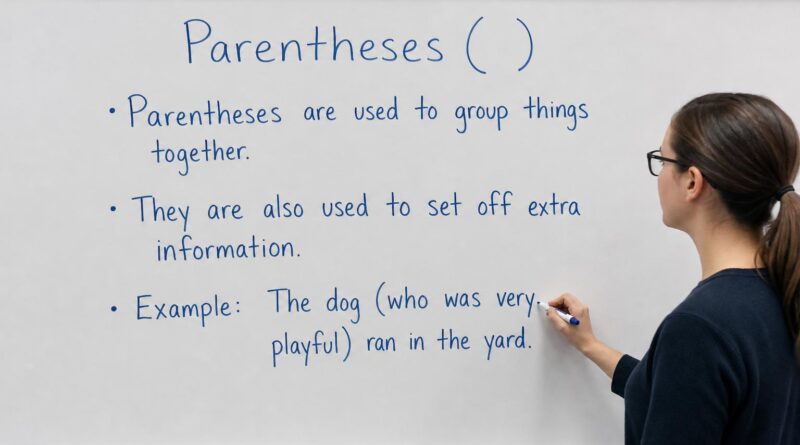
In everyday writing and speech—especially in editing, programming, and linguistics circles—“parens” almost always means “parentheses.” It’s informal shorthand. You’ll hear someone say, “Move that aside into parens,” or “Add parens around the area code.” In these contexts, they’re talking about the curved marks: ( ). The singular “paren” is common jargon in tech and math (“Add a closing paren”), while traditional dictionaries list the singular as “parenthesis.” Don’t let the forms trip you up: paren (jargon), parenthesis (formal), parentheses (the pair or plural), and parens (informal plural).
There’s also regional wording to consider. In British English, “brackets” can refer to the curved marks. In most Canadian style guides and technical writing, “brackets” means square brackets [ ], “parentheses” means round brackets ( ), and “braces” or “curly brackets” are { }. Because Canadian writing draws from both British and American conventions, you will sometimes hear Canadians casually call parentheses “brackets.” In professional contexts—journalism, academia, government—stick with the precise terms to avoid confusion.
Parentheses, Brackets, Braces: What Canadians Usually Mean
A quick reference helps keep conversations (and drafts) tidy. In Canada’s editorial and technical communities, the following mapping is standard:
| Term | Shape | Primary Uses (Canada) | Notes |
|---|---|---|---|
| Parentheses (parens) | ( ) | Asides, clarifications, in-text citations (APA); math grouping; phone area codes; negatives in finance | Commonly shortened to “parens,” especially in programming |
| Brackets | [ ] | Editorial insertions in quotations; legal and academic citations; nesting inside parentheses; math intervals | In Canadian English, “brackets” means square brackets unless otherwise specified |
| Braces | { } | Programming (block scopes, object literals); some math sets | Called “curly braces” in software teams |
Is it ever wrong to say “brackets” for these round marks? In a casual conversation, you’ll be understood. In professional writing, use “parentheses.” In coding, “paren” is natural, “bracket” is imprecise.
Where You’ll Hear “Parens” in Canada
Editors and journalists use “parens” when discussing line edits: “Let’s push that qualifier into parens so the sentence breathes.” Developers do the same: “The linter flags missing parens on arrow functions.” Academics note “parens” when explaining citation systems (“author-date in parens”). And accountants, bookkeepers, and CRA preparers use them on statements to show negative amounts. Across these fields, the practical question is the same: do parens help clarity, or hide it? Used sparingly, they clarify. Used everywhere, they bury your point.
Parens Meaning in Law: Parens Patriae in Canada
Switch gears to the legal world and “parens” leads to the Latin phrase parens patriae, literally “parent of the nation.” In Canadian law, parens patriae refers to the superior court’s inherent jurisdiction to protect vulnerable people who cannot protect themselves—historically children, and in modern law also adults who lack capacity. It is part of the court’s equitable, protective function. It is not a blank cheque; it is bounded by legislation, rights protections, and the best-interests principle.
What Parens Patriae Means in Practice
Canadian superior courts (the provincial and territorial courts of inherent jurisdiction) can invoke parens patriae to make orders for the welfare of those who can’t decide for themselves. That might involve authorizing medical treatment for a child when urgent care collides with parental refusal; appointing a decision-maker where statutory pathways are unclear; or filling rare gaps where legislation does not address a vulnerable person’s needs. The court’s role is protective and exceptional, not routine.
The doctrine lives alongside detailed provincial and territorial statutes—child protection acts, health care consent statutes, and adult guardianship laws—that often set the primary rules. Where legislation applies squarely, it governs. Where a genuine gap appears, parens patriae may step in. Canadian courts emphasize restraint: the doctrine is for the person’s best interests, not for the state’s convenience.
Key Supreme Court of Canada Guidance
Two Supreme Court of Canada decisions often anchor discussions of parens patriae:
- Re Eve, [1986] 2 S.C.R. 388: The Court refused to authorize a non-therapeutic sterilization of a mentally incompetent adult under parens patriae. The judgment underscored that the power is protective, must be exercised in the individual’s best interests, and does not authorize irreversible procedures absent a compelling therapeutic basis. It also affirmed that superior courts retain this jurisdiction, but it is to be used carefully and sparingly.
- A.C. v. Manitoba (Director of Child and Family Services), 2009 SCC 30: The Court examined the interplay between statutory child welfare schemes and the mature minor doctrine. While the case focused on statutory interpretation and rights, it recognized that legislative frameworks may displace or channel parens patriae, and that capacity—and not just age—matters in medical decision-making for minors.
Other Canadian cases explore adjacent themes—parental autonomy, best interests, and the scope of child protection powers—but the through line remains: parens patriae supports vulnerable individuals, respects rights, and yields to clear legislation.
Limits and Safeguards
Canadian courts will not use parens patriae to bypass a comprehensive legislative regime. If a province has a detailed Consent to Treatment statute or a Child, Family and Community Services Act, judges apply that law first. Courts also avoid substituting their preferences for a capable person’s choices. Where the individual is capable, consent law and autonomy control. Where Charter rights are in play, courts carefully justify any limits, using proportionality and statutory interpretation principles.
Procedurally, parties seeking parens patriae orders face evidence-based scrutiny. Judges want to see medical assessments, capacity evaluations where relevant, detailed plans for care or property, and a clear articulation of why existing legislation is inadequate for the specific circumstances. The goal is not simply to act—it is to act lawfully, narrowly, and in the person’s best interests.
Real-Life Canadian Examples
Child Protection and Medical Decisions
Consider an urgent pediatric case at a Canadian hospital where a parent objects to a blood transfusion on religious grounds. In most provinces, child protection statutes allow hospitals or children’s aid societies to seek court authorization for necessary treatment, focusing on the child’s best interests. Parens patriae might be discussed in the background, but the court typically applies the statute directly. The result: the child receives indicated care, parents’ views are respectfully heard, and the court’s order rests on clear legislative footing.
Adults Lacking Capacity
Across Canada, adult guardianship and consent laws cover most situations where a person can’t make decisions. When a rare gap appears—say, a unique medical decision without a statutory pathway or an urgent protective step a statute did not foresee—a superior court might rely on parens patriae to authorize a narrow, time-limited solution. Judges prefer to build on existing frameworks (temporary guardians, committees, SDMs) rather than invent free-floating authority.
Class Actions, Settlements, and Cy-Près
Although cy-près distribution in class actions is usually an equitable remedy rather than a pure parens patriae exercise, courts sometimes invoke their protective role when approving settlements that affect minors or other vulnerable members. The underlying principle is similar: ensure fairness to those who cannot fully represent themselves, and maintain judicial oversight where rights are at stake.
Related Latin in Canadian Law: In Loco Parentis
In loco parentis—“in the place of a parent”—is not the same as parens patriae, but you’ll often meet it in Canadian law. It describes relationships where someone assumes parental responsibilities, such as a step-parent who has acted as a parent to a child. The concept appears in family law (child support and custody) and sometimes in education law. The test is fact-specific: Did the adult stand in a parental role? Did they take on decision-making, caregiving, and financial support? Courts focus on best interests and fairness, not labels alone.
Parens as “Parentheses”: Punctuation and Style Canadians Actually Use
Switch back to writing. If someone asks for the “parens meaning” in a sentence, they want punctuation guidance: when to use parentheses instead of commas or dashes, how to punctuate around them, and how to keep sentences readable. Canada’s editorial ecosystem has familiar anchors: The Canadian Press (CP) style in journalism and government communications, the McGill Guide for legal citations, and academic styles like APA, MLA, and Chicago in universities.
Canadian Press (CP) Style on Parentheses
CP style aims for clarity and brevity. Parentheses are fine for short asides that don’t derail your sentence, but CP encourages writers to consider alternatives first: recast the sentence, use a pair of commas, or set off with dashes if the aside is emphatic. Long parenthetical detours tire readers, especially on mobile. Some CP-style habits worth remembering:
- Keep parenthetical statements short; if it runs long, it likely belongs in a new sentence.
- If the entire sentence is in parentheses, place the final period inside the closing parenthesis.
- If only part of a sentence is in parentheses, the period belongs outside—unless the aside is a full sentence within another sentence, which CP generally advises against because it’s clunky.
- For quoted material, use square brackets [ ] to add clarifications inside a quotation, not parentheses.
Journalists and public communicators writing for a Canadian audience should also consider plain language guidelines common in federal and provincial communications: short sentences, concrete wording, minimal detours in parens. If a parenthetical note is essential, make it earn its keep.
Academic Styles in Canadian Universities
Most Canadian universities accept multiple citation styles depending on discipline:
- APA (widely used in social sciences) relies on author-date in parentheses: “Research shows… (Smith, 2020).” Parentheses also wrap figure labels, statistical values, and abbreviations on first use.
- MLA (humanities) uses parenthetical author-page citations: “… (Smith 42).” Minimal punctuation inside the parens is a hallmark.
- Chicago/Turabian (history, many disciplines) may prefer footnotes, but when author-date is used, parentheses carry the in-text citations much like APA.
Canadian assignments often include style handouts that reinforce basic punctuation rules: don’t overuse asides; don’t nest parentheses unless your style guide explicitly allows it. If you must nest, switch shapes: put (round) inside [square] rather than stacking ( ( like this ) ). Many instructors simply prohibit nesting because it slows reading.
Bilingual Writing: English Parentheses and French Parenthèses
Canada’s bilingual reality adds small but important typographic details:
- In French, parentheses are “parenthèses” and the content rules are similar: use them sparingly for asides and references.
- French typography uses a non‑breaking space before certain punctuation marks (: ; ! ?), but not inside parentheses. Don’t insert spaces just inside “(” or just before “)”.
- Bilingual documents often mirror content. If you include a parenthetical acronym in English (e.g., “Public Health Agency of Canada (PHAC)”), do the same consistently in French (“Agence de la santé publique du Canada (ASPC)”).
If your audience includes screen reader users, be careful with bilingual duplication of long acronyms in parens. Consider defining once early, then using the short form thereafter, in both languages, to cut noise.
Punctuation Around Parentheses: Periods, Commas, Question Marks
Small marks can change meaning. A few reliable rules for Canadian English:
- If the whole sentence is inside parentheses, the period goes inside: “(This is a complete sentence.)”
- If only part of a sentence is in parentheses, the period goes outside: “This is a sentence (with a brief aside).”
- Question or exclamation marks go inside if the parenthetical is itself a question or exclamation: “He finally filed (on time!).” If the main sentence asks the question, they go outside: “Did he file (as promised)?”
- Don’t double-punctuate. Avoid “…?).” at the end of a sentence unless your style guide demands it. Typically, one terminal mark suffices.
Quotation marks interact with parentheses too. In Canadian journalism, logical punctuation is common: punctuation belongs inside quotes only if it belongs to the quoted material. Parentheses then wrap the aside around the quote as needed: She called it “a turning point” (her words, not mine). Keep nested punctuation light to avoid ambiguity.
Spaces, Capitalization, and Nesting
Skip the space after an opening parenthesis and before a closing one in English: write “(Toronto)” not “( Toronto )”. Capitalize the first word inside parentheses only if it is a proper noun or begins a full sentence. And if you catch yourself nesting parentheses more than once, that’s a sign to rewrite. Switch to a pair of em dashes—or separate into two sentences.
Accessibility and Plain Language in Canada
Parens can frustrate screen reader users if overused or if they contain long, complex asides. In Canada, many public sector bodies adopt or reference WCAG 2.0 or 2.1 accessibility standards (Ontario’s AODA points to WCAG 2.0 Level AA). Practical tips:
- Use parentheses for short clarifications only; move essential information into the main sentence.
- When linking, avoid placing the only explanation inside parentheses—make the link text itself descriptive.
- For phone numbers and dates, present a single clear format rather than multiple options in parens.
Ask yourself: would this aside confuse someone listening rather than reading? If so, recast it.
Parens in Math and Finance: From Order of Operations to CRA Forms
Mathematicians and finance professionals rely on parentheses for disambiguation. Get them right, and your calculation is transparent. Get them wrong, and the HST you charge (or the discount you apply) can be off by dollars on every transaction—multiplied across a month, that’s a headache.
Order of Operations and Grouping
Parentheses define what to do first. Consider a retail example familiar to anyone selling in Ontario with HST at 13%:
Scenario A (discount first, then tax): Price $100, 10% discount, then HST. Computation: (100 × 0.90) × 1.13 = $101.70.
Scenario B (tax first, then discount): 100 × 1.13 × 0.90 = $101.70. In this particular case, multiplication’s commutativity makes the order irrelevant, but in many pricing policies, discounts apply to pre-tax subtotals by rule, not by math necessity. Parentheses make the rule explicit: “HST applies to the discounted subtotal (not the original price).”
Complex formulas benefit even more. If a small Canadian business computes a monthly remittance as “(gross sales − returns − exemptions) × HST rate − input tax credits,” the outer parens ensure credits aren’t mistakenly subtracted before tax is calculated. Without the grouping, a spreadsheet error is one misplaced operator away.
Intervals and Inequalities
In mathematics, parentheses denote open intervals; brackets denote closed intervals. That matters in statistics and modeling across Canadian universities and government reports:
- (a, b) means all numbers strictly between a and b, excluding endpoints.
- [a, b] means include a and b.
- Half-open intervals combine them: (a, b] or [a, b).
When reporting reference ranges in health or environmental data, Canadian researchers typically explain whether endpoints are included. Parentheses communicate open boundaries efficiently, but a one-line note—“bounds exclusive”—prevents misreads outside technical audiences.
Accounting and Tax: Parentheses as Negatives
In Canadian financial statements following IFRS or ASPE, parentheses often indicate negative values, losses, or outflows. For example, an income statement may show “(2,450)” to flag a loss. Some sectors use a minus sign instead; consistency is more important than the symbol chosen, but parentheses remain common in Canadian corporate reporting.
On many CRA forms and schedules, instructions explicitly say to place negative amounts in brackets. If you prepare a T2 or T1 schedule by hand or in software, double-check whether the field expects a bracketed negative or a minus. When exporting to CSV or uploading to online portals, remember that machine-readable formats ignore visual brackets—use a minus sign in data files while preserving parentheses in human-facing PDFs.
Why favour parentheses? In dense tables, a bracketed negative is highly visible. Auditors, boards, and lenders reviewing Canadian statements are trained to scan for them. That visual cue speeds risk spotting—and that alone justifies the convention.
Parens in Programming and Regex: Used Constantly by Canadian Tech Teams
Developers across Canada—from fintech teams in Toronto to startups in Vancouver—refer to parentheses as “parens.” The term shows up in code reviews, lint messages, and pull requests. The meaning is concrete: group expressions, call functions, capture groups. The rules, though, vary by language.
Function Calls and Definitions
In C, Java, JavaScript, and similar languages, parentheses follow function names to indicate calls: “payInvoice()”. Parameters live inside: “chargeHST(amount, rate)”. Some languages require parens even with no arguments; others allow dropping them in specific syntaxes. In Python, you always use parens to call a function—“print()”—even if it takes no arguments. Skipping them changes meaning: “print” the variable is a reference; “print()” performs the action.
Arrow functions and lambdas add twists. In JavaScript, “x => x + 1” omits parens for a single argument; “(x, y) => x + y” needs them for more than one. Linters in Canadian codebases often enforce a consistent style to reduce mental load: always include parens around arguments. The tiny keystroke is cheap; the readability is free.
Grouping and Operator Precedence
Every language has rules for which operators bind more tightly. Parentheses override those defaults, preventing bugs. A real-world example: a SaaS platform calculating provincial sales tax (PST) where applicable and HST where not. Wrapping conditions and arithmetic in explicit parens saves engineers from invisible precedence errors that mischarge customers in Saskatchewan or tax-exempt supplies in Alberta. If your billing affects filings to the CRA or Revenu Québec, those parens aren’t stylistic—they’re compliance.
Regular Expressions: Capturing Groups and Canadian Postal Codes
Regex uses parens for grouping and capturing. Without them, you can’t backreference; with them, you structure matches. A common Canadian example is validating postal codes. A simplified, readable pattern might look like this conceptually: “first letter from allowed set, digit, letter, space optional, digit, letter, digit.” Using parentheses for grouping and alternation allows you to capture the Forward Sortation Area (FSA) and Local Delivery Unit (LDU) separately for analytics—useful for shipping logic that treats rural codes differently from urban ones.
Two cautionary notes for Canadian teams:
- Validation vs. normalization: Accept inputs like “M5V 3L9”, “M5V3L9”, or “m5v 3l9” (case-insensitive), then normalize to “M5V 3L9”. Over-strict regexes reject real customers.
- Privacy: If you log regex captures, remember that postal codes can be personally identifying when combined with other data. Align logging with PIPEDA and provincial privacy laws.
Shell and Command Line
On Linux and macOS (popular among Canadian developers), parentheses in Bash create subshells: “(cd /tmp && run-task)” runs inside a child process. Double parentheses compute arithmetic: “$((a + b))”. If your CI/CD scripts deploy to Canadian cloud regions or Crown environments with strict change control, a stray paren can fork a subshell and silently skip an export—leading to missing environment variables. Treat parens with care in scripts that touch production.
Security Notes
Parentheses themselves aren’t dangerous, but they often mark boundaries for evaluation. In SQL or template engines, untrusted input inside parens can become an injection vector. Canadian organizations that operate under PIPEDA, provincial privacy laws, or sector regulations (e.g., OSFI for federally regulated financial institutions) should enforce parameterized queries and templating that escapes special characters. Trust the pattern: never string-concatenate untrusted values into parens where an engine could execute them.
Everyday Canadian Examples: Phone Numbers, Forms, and Signs
Watch for parentheses in daily Canadian life and you start seeing them everywhere: area codes, municipal notices, transit fare charts, and service menus.
Phone Numbers and E.164
North American numbers, including Canadian ones, are often printed as “(416) 555‑0123” or “(604) 555‑0123.” That format is friendly to humans: the parens announce the area code. Machines, though, want E.164: “+14165550123”. If your website lists both a local number and an international format, avoid stacking formats with too many parens. Offer one visible clickable link in E.164 for mobile users (“+1 416 555 0123”), and list the local style in text if necessary. It’s cleaner—and it works everywhere from Halifax to Whitehorse.
Transit and Municipal Notices
Parentheses crop up in fare tables and service notes: “Concession (65+),” “Off‑peak (after 7 p.m.).” Keep those asides short. In bilingual cities like Montréal or Ottawa, avoid doubling long parentheticals in English and French on the same line; move extended conditions to a footnote or a separate line so riders don’t miss the essential price.
Public Health and Legal Notices
During public health campaigns, parentheses often hold examples: “Get your booster (free with your health card).” On legal notices, they carry statutory references: “Noise By‑law (No. 2017‑255).” Both are fine. The test is utility: does the parenthetical help a person act? If not, omit it or expand into a clear main clause.
Common Mistakes with Parens—and How to Fix Them
Even careful writers and developers stumble over parentheses. The good news: most errors fall into a few patterns with simple fixes.
Overstuffed Parentheticals
Symptom: a long, comma-heavy aside inside parens that spans multiple lines. Fix: pull essential details into the main sentence; move the rest into a new sentence or a footnote. In CP-style writing, shorter beats win.
Dangling Parens in Code
Symptom: a missing closing paren causing a build or runtime error. Fix: editors and linters. In Canadian tech teams, share standardized editor configs (Prettier, ESLint, Black) across the repo so the machine catches what humans miss.
Nesting Without Need
Symptom: “(Call your insurer (or broker) for details).” Fix: rewrite: “Call your insurer or broker for details.” Or use one set of parens and commas: “Call your insurer, or your broker, for details.” If you must nest—say, in legal writing—switch to [square] inside (round).
Punctuation Misplacement
Symptom: periods inside parens when only part of the sentence is parenthetical. Fix: keep the period outside in these cases. Save the inside period for standalone parenthetical sentences.
Bracket Confusion in Bilingual Settings
Symptom: adding spaces inside French parentheses or mixing French spacing rules into English. Fix: in French, maintain no spaces just inside the parentheses; apply non‑breaking spaces before : ; ! ?, not around parens. In English, keep punctuation tight to words.
Legal Citation Misfires
Symptom: using round parentheses for a year when square brackets are required in a citation. Canadian legal style (McGill Guide) uses square brackets when the year is essential to locate the volume, and parentheses when it isn’t. Fix: check the reporter’s conventions and your edition of the McGill Guide. An incorrect bracket can make a source hard to find.
Choose the Right Bracket: A Quick Decision Guide
Unsure whether to use parentheses, brackets, or braces? Run through this short logic:
- Am I adding a brief aside or clarification that the sentence can live without? Use parentheses.
- Am I inserting words into a quotation for clarity or indicating editorial changes? Use square brackets.
- Am I writing code that needs grouping or an object/array literal? Use parentheses for grouping and function calls; braces for code blocks and objects; brackets for arrays or indices.
- Am I presenting a math interval? Use parentheses for open bounds and brackets for closed ones.
- Am I formatting negative values in a financial statement? Use parentheses consistently if that’s your organization’s convention.
If more than one rule applies, prioritize clarity for the audience. In a public notice, fewer symbols often beat perfect formalism. In source code or citations, follow the conventions strictly.
Legal and Academic Citations: Round vs. Square in Canada
Because “parens meaning” often lands in citation territory, a quick word on Canadian legal and academic usage saves time.
The Canadian Guide to Uniform Legal Citation (McGill Guide) distinguishes between square brackets [ ] and parentheses ( ) around years in case citations. Use square brackets when the year is essential to identify the volume of the reporter series; use parentheses when the volume numbering is independent of the year. Many Canadian law students learn this in first-year legal research; the habit pays off lifelong in practice and scholarship.
In academic styles like APA and MLA, parentheses do most of the in-text citation work, while square brackets serve special roles (e.g., APA uses them for descriptions like “[Video]”). When in doubt, check the most recent edition your department or publisher requires—Canadian universities often host quick guides on their library websites.
Typing and Input: Canadian Keyboards and Mobile
On most Canadian English keyboards, “(” and “)” sit above “9” and “0.” On the Canadian Multilingual Standard layout (used by some bilingual writers), they remain accessible with Shift-9 and Shift-0. On phones, long‑press or switch to the symbols screen. If you frequently type parentheses in both English and French contexts, verify your autocorrect doesn’t add unwanted spaces in one language or drop them in the other.
Developers and analysts in Canadian workplaces who juggle multiple keyboard layouts—English (Canada), French (Canada), U.S.)—can avoid typos by setting a single default layout per project session. Unexpected locale switches produce sneaky bugs, especially when writing shell commands or regex patterns involving parens.
Etymology: Where “Parens” and “Parentheses” Come From
Two roots converge here. The Latin “parens” means “parent,” from the verb parere (“to bring forth”). It survives intact in legal Latin—parens patriae, in loco parentis. The punctuation term “parenthesis” comes from Greek (parenthesis: “insertion”), borrowed into Latin and then English to mean a remark inserted into a sentence. Over time, the curved marks themselves took the name “parentheses.” The informal shorthand “parens” likely spread in technical communities because it’s quicker to say and type—especially when a missing paren can crash a program.
Putting It All Together: Practical Canadian Scenarios
Three quick vignettes tie the threads:
- Government communications: A provincial health ministry publishes a vaccine announcement. Good: “Eligible residents can book online or by phone (TTY: 1‑800‑XXX‑XXXX).” Better for accessibility: present the TTY number on its own line without parentheses so screen readers don’t bury it. The main call to action stays crisp.
- Legal memo: A lawyer in Calgary drafts a guardianship application. They reference Re Eve and explain why statutory adult guardianship provisions address most needs. Parens patriae appears as a possible backstop, not a headline, with a narrow proposed order and clear capacity evidence. The memo respects the doctrine’s limits.
- Startup billing: A Montréal fintech team calculates GST/HST/PST for merchants in different provinces. They use explicit parentheses in formulas, comprehensive unit tests, and regression checks across Canadian provinces and territories. Customer bills match tax rules, and auditors smile.
Do’s and Don’ts for “Parens” Across Contexts
- Do use parentheses for short, nonessential asides. Don’t cram a paragraph into them.
- Do use square brackets for editorial insertions in quotations. Don’t use parentheses inside quotes for that purpose.
- Do use parentheses to group math and code expressions. Don’t rely on operator precedence when the stakes involve money or privacy.
- Do follow Canadian style guides: CP for journalism, McGill for legal citations, APA/MLA/Chicago for academia. Don’t mix systems casually.
- Do format negatives with parentheses if that’s your organization’s standard. Don’t switch symbols mid-report.
- Do keep bilingual typography rules straight. Don’t import French spacing around parentheses into English (or vice versa).
Quick Reference Table: “Parens Meaning” by Domain
| Domain | What “parens” means | How to use | Canadian nuance |
|---|---|---|---|
| Everyday writing | Parentheses ( ) | Short asides; keep punctuation tidy | CP style prefers brevity; avoid cluttering public notices |
| Law | Parens patriae | Protective jurisdiction for vulnerable people | Limited, evidence-based; yields to statute; Re Eve; A.C. v. Manitoba |
| Academia | Parentheses for citations | APA/MLA/Chicago in-text references | Follow department guidance; avoid nesting |
| Programming | Parens for calls/grouping | Function calls, precedence, regex groups | Normalize postal codes; protect privacy; CI linting |
| Finance/Tax | Negatives in parens | Visible losses/outflows | CRA forms often expect bracketed negatives in print; use minus in data |
| Bilingual comms | English/French parentheses | Short clarifications; mirrored acronyms | French spacing rules differ; keep parens tight |
FAQ: Parens Meaning and Practical Usage in Canada
What does “parens meaning” usually refer to?
It depends on context. In everyday English and tech, “parens” means “parentheses”—the punctuation marks ( ). In law, it often points to parens patriae, the court’s protective role. If you’re reading a code review or a style guide, assume parentheses. If it’s a legal memo, think parens patriae.
Is “paren” an acceptable word?
Yes in programming and math jargon, where “paren” (singular) and “parens” (plural) are common. In formal writing, use “parenthesis” and “parentheses.”
What’s the difference between parentheses and brackets in Canadian English?
Parentheses are round ( ) and hold asides or clarifications. Brackets are square [ ] and are used for editorial insertions, citations, and nesting. While some Canadians casually call parentheses “brackets,” professional usage distinguishes them.
How do Canadian courts use parens patriae?
As a narrow, protective power exercised by superior courts to act in the best interests of vulnerable people when legislation doesn’t provide a path. It’s cautious, evidence-based, and limited. Leading cases like Re Eve and A.C. v. Manitoba outline its scope and interaction with statutory regimes.
Do I put the period inside or outside the parentheses?
If the entire sentence is inside parentheses, put it inside. If only part of the sentence is in parentheses, the period goes outside. Question or exclamation marks follow the logic of what they apply to.
Can I nest parentheses?
Try not to. If you must, switch shapes: use [brackets] inside (parentheses). Many Canadian style guides discourage nesting because it slows reading, especially on mobile.
Why do Canadian financial statements use parentheses for negatives?
Parentheses make negative numbers highly visible in dense tables. It’s a longstanding accounting convention in Canada under IFRS/ASPE. Data exports may use a minus sign even if the printed statement shows parentheses.
How should I format Canadian phone numbers with parentheses?
Human-friendly: “(416) 555‑0123.” Machine-friendly and clickable: “+14165550123.” Provide at least one E.164 link on web and mobile for accessibility and international callers.
What’s the best practice for postal code validation?
Use a tolerant regex that accepts “M5V 3L9” and “M5V3L9,” normalize case and spacing, and avoid logging captured groups unnecessarily. Remember privacy obligations under PIPEDA and provincial laws.
Does French in Canada use spaces with parentheses?
No spaces just inside “(” or “)”. French does use a (non‑breaking) space before : ; ! ?, but that rule doesn’t apply inside parentheses. Keep bilingual documents consistent and accessible.
How do parentheses work in Canadian legal citations?
Round vs. square brackets around years have different meanings under the McGill Guide. Use square brackets when the year is needed to locate the volume, parentheses when it’s not. Check the latest edition your institution or court expects.
When should I avoid parentheses altogether?
When the information is essential, long, or procedural (e.g., steps to apply for a benefit). Move it into the main text or a bullet list. Parentheses are for quick asides, not core content.
If you remember one thing from this guide, make it this: “parens meaning” is about boundaries. In law, it sets the boundary for the court’s protective power—narrow, careful, human-focused. In writing, math, finance, and code, it sets the boundary for ideas—what groups with what, what reads cleanly, what computes correctly. Draw those boundaries well, and your work lands clearly with Canadian readers, users, clients, and courts.