
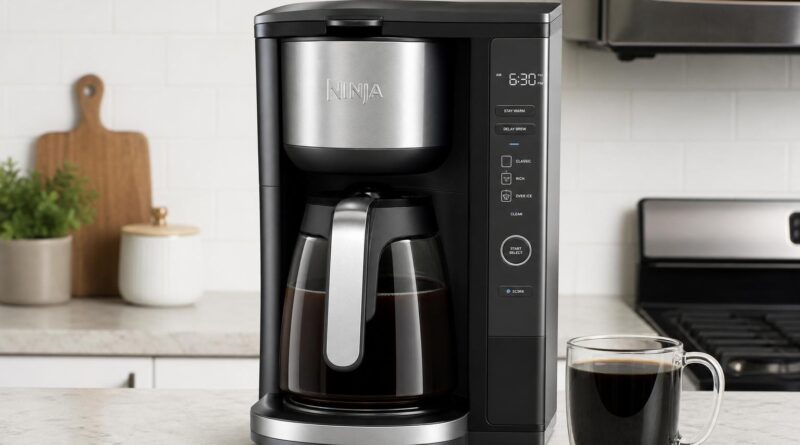
Ninja Coffee Maker in Canada: A Complete Guide to Buying, Brewing, and Loving Your Daily Cup
Walk into any Canadian kitchen at 7 a.m., and you’ll see the same ritual: grind, pour, press a button, and hope the coffee is worth getting out of bed for. A Ninja coffee maker aims to make that ritual simple without turning your counter into a café science lab. If you’ve been eyeing a Ninja brewer—or you just bought one and want to get the most from it—this deep dive will help you choose the right model, dial in flavour, cut waste, and keep it running smoothly in Canadian conditions, from Vancouver’s soft water to Calgary’s rocky-mineral brew.
Below, you’ll find plain-language explanations, step-by-step brewing tips (including iced and cold brew), smart maintenance routines, Canadian pricing and store options, and practical comparisons. By the end, you’ll know how to get café-quality coffee at home without fuss or guesswork.
What Is a Ninja Coffee Maker—and Why Do Canadians Like It?
Ninja coffee makers are countertop drip brewers made by SharkNinja, designed to be flexible. Instead of locking you into a single size or coffee style, most Ninja models let you brew anything from a single mug to a full carafe, with options like “Classic,” “Rich,” “Over Ice,” “Cold Brew,” and “Specialty” (a concentrated shot for lattes and cappuccino-style drinks). Some models also accept K‑Cup pods alongside ground coffee.
Why they resonate in Canada comes down to practicality. One machine that handles weekday drip, weekend brunch carafes, and the occasional iced latte keeps the counter uncluttered. Add in a fold-away milk frother on many models, and you can pull off a creamy flat white without buying a separate appliance. Most units are 120V/60Hz and carry Canadian safety certifications (look for the CSA or cUL mark), so you’re set for local outlets. And because they’re sold at major retailers across the country, parts and support aren’t hard to find.
Ninja Lineup at a Glance (Canada)
Exact model numbers shift over time, but the core categories stay consistent. Here’s how to make sense of what’s on shelves at Canadian Tire, Best Buy Canada, Costco, Walmart, and Amazon.ca.
| Line | What It Does Best | Key Features | Brew Sizes | Approx. Price (CAD) | Good For |
|---|---|---|---|---|---|
| 12‑Cup Programmable Brewer | Straightforward drip coffee | Glass carafe with warming plate or thermal carafe, small-batch setting | Small batch (1–4 cups) to full carafe | $120–$180 | Households that mainly drink classic drip |
| Specialty Coffee Maker | Concentrated “specialty” shots + drip | Specialty brew, Over Ice, fold‑away frother, multi‑size brewing | Single cup to full carafe | $180–$260 | Lattes/cappuccino-style drinks without espresso machine |
| Hot & Cold Brewed System | Drip, iced, and cold brew in one | Cold Brew setting, tea settings (black/green/herbal), frother | Single cup to full carafe | $220–$320 | Homes that want real cold brew + tea options |
| DualBrew / DualBrew Pro | Ground coffee + K‑Cup compatibility | Pod adapter, thermal carafe on some, hot water dispenser, frother | Pod sizes + cup to full carafe | $220–$360 | Mixed households: pod lovers and drip fans |
Prices fluctuate with promos and warehouse-club bundles; expect sales around Boxing Day, spring appliance events, and Prime-style promotions. When buying, confirm the included carafe type (glass vs. thermal), whether a permanent filter is in the box, and if a pod adapter is included on DualBrew units.
Glass vs. Thermal Carafe: Which Suits a Canadian Kitchen?
Most Ninja brewers offer a glass carafe with a warming plate or a double-walled stainless steel thermal carafe. Both have fans, but they behave differently.
- Glass + warming plate: Keeps coffee hot by heating from below. Convenient for office-style sipping, but heat can drive off aromatics if left on for hours. Good for families who pour frequently and finish the pot within 60–90 minutes.
- Thermal: Insulates rather than reheats. Coffee stays hot and tastes truer for 2–4 hours without “cooked” notes. Better for weekend slow sipping or cottages where you don’t want a hotplate running. Slightly pricier upfront.
In a nutshell: choose glass if you like the look and want straightforward heat; choose thermal if flavour purity matters and you often brew a full carafe you’ll nurse over time.
How a Ninja Coffee Maker Brews (and Why It Tastes Different)
Ninja’s approach hinges on controlled water delivery and tailored programs. Here’s what actually happens:
- Metered water pulses: Instead of dumping hot water all at once, the machine delivers it in measured bursts. That helps saturate grounds evenly and mimics a manual bloom without requiring you to do anything.
- Variable extraction profiles: “Classic” uses a balanced flow for a clean, familiar cup. “Rich” slows extraction a touch and adjusts ratio to boost body. “Specialty” focuses on a small volume concentrate for milk drinks. “Over Ice” compensates for dilution. On Hot & Cold models, “Cold Brew” runs a longer, cooler cycle for smoother sweetness.
- Multi‑size calibration: Whether you’re brewing a single mug or a full carafe, the machine adjusts contact time and water volume so flavour stays consistent. That’s the biggest real-world win over basic programmable drip units that scale poorly to small batches.
What you’ll taste: brighter, more even flavour than budget drip machines, fewer sour/bitter swings when brewing just one cup, and iced coffee that doesn’t go watery immediately.
Choosing the Right Ninja Coffee Maker for Your Home
Start with how you actually drink coffee. A few honest questions lead you to the right machine:
- Mostly drip or also lattes/iced drinks? If you crave milk drinks and iced coffee, look at Specialty or Hot & Cold. If you want true cold brew, Hot & Cold is your pick.
- Grounds only or pods too? If someone in the house wants K‑Cups, DualBrew covers both worlds without two machines on the counter.
- How many people drink daily? Solo drinkers can still use multi-serve machines—Ninja scales down well—but if you rarely brew more than a mug, a compact footprint matters. Families may prefer a model with a thermal carafe.
- Counter space and clearance: Measure under-cabinet height and depth. Ninja brewers vary in footprint; DualBrew models are usually deeper due to pod adapters and water tanks. Leave space above for the brew basket to swing out and for steam to escape safely.
If you’re in Quebec, confirm the box and manual are bilingual and that the product carries a cUL or CSA certification mark—most retail units do, and Quebec retailers typically verify this. For any province, check the return policy: Canadian Tire and Best Buy commonly have 14–30 day returns on small appliances; Costco is famously flexible; Amazon.ca return windows vary by seller.
Where to Buy in Canada (and What to Look For)
You’ll find a ninja coffee maker at national chains and online marketplaces. Typical options:
- Canadian Tire, Best Buy Canada, and Walmart Canada: Reliable stock, seasonal discounts, easy in-person returns.
- Costco Canada: Competitive bundle pricing, often with a thermal carafe and extra filters; generous return policy, but models rotate frequently.
- Amazon.ca: Broad selection and fast shipping; confirm the seller is authorized or Amazon itself to simplify warranty support.
- SharkNinja’s Canadian website: Sometimes offers direct bundles, spare parts, and accessories.
Scan for: price drops during long weekends, whether a reusable gold-tone filter is included, and the country-specific model suffix (a Canadian unit will note Canadian compliance and voltage). Keep an eye on energy rebates databases for appliances; coffee makers aren’t typical rebate items, but power-sipping thermal models with auto-off save small pennies long-term.
Setup: From Box to First Cup
Unboxing is straightforward, but a careful first run pays dividends.
- Wash removable parts: Carafe, brew basket, permanent filter (if included), water reservoir, scoop, and frother whisk (if present). Warm water with a drop of mild dish soap is enough. Rinse thoroughly.
- Seat the water reservoir: Most Ninja tanks lock into place; a soft click ensures no drips. Use cold, fresh water.
- Run a “water only” cycle: Brew a full carafe of plain water to rinse the internal lines. Discard.
- Attach the scoop holder: Many models park the scoop along the side; it’s marked for cup sizes. It’s not a gimmick—those marks are calibrated for the machine’s brew profiles.
- Set the clock and program auto-brew (optional): Press the program button and set time; confirm AM/PM if your model displays it.
- Frother test: If your model has a fold-away frother, run it in a mug of water to confirm it spins freely. Don’t submerge the motor arm; just the whisk.
Tip: If you’re in a hard-water city like Calgary or Regina, consider using filtered water (Brita-style) from day one to reduce scaling and improve taste. Vancouver’s water is soft; Toronto and Montreal are moderate.
Grind Size, Ratios, and Filters: Get the Fundamentals Right
Your ninja coffee maker is forgiving, but two variables control flavour the most: grind size and ratio.
Grind Size
Use a medium grind for drip. Think granulated sugar, not powder. Too fine leads to bitterness and slow dripping; too coarse tastes weak and sour. If buying pre-ground, “drip” grind works, but for best flavour invest in a burr grinder. Popular, consistent options in Canada include entry-level burr grinders from Baratza and Bodum—don’t stress about brand; consistency matters more than the name on the box.
Coffee-to-Water Ratios
A practical starting point is 1:16 by weight (1 gram coffee to 16 grams water). For most mugs, that’s about 18–20 grams (roughly 3–4 tablespoons) for a 300–350 ml cup. Ninja’s included scoop is calibrated; if you prefer volume measures, follow the scoop marks for your brew size and style, then tweak by taste.
- Classic brew: 1:16–1:17 (cleaner, lighter body)
- Rich brew: 1:14–1:15 (fuller body, better for milk)
- Specialty (concentrate): Higher dose per ounce, akin to 1:7–1:10; the machine’s program handles volume—just use the Specialty line on the scoop.
- Over Ice: Use the Rich setting and dose as if you were brewing hot; the machine compensates for dilution.
Paper vs. Permanent Filter
Many models include a gold-tone reusable filter; you can also use standard #4 paper cone filters. Paper gives a cleaner cup with less oil and sediment. Permanent filters deliver a richer body and more oils, which some people love—especially for lattes and iced coffee where extra body helps. If your municipal compost accepts coffee filters, paper can be composted with grounds; check local rules (e.g., Toronto and Vancouver typically accept them in green bins, but confirm updated guidelines).
Step-by-Step Brewing Methods (Hot, Iced, Cold, and Specialty)
Classic or Rich Drip (Everyday Mug)
- Add fresh water to the tank.
- Insert filter (paper or permanent). Add medium-ground coffee using the scoop marks for your chosen size.
- Place your mug or carafe. Select size (Cup/Travel/Carafe) and “Classic” or “Rich.”
- Press Brew. The machine will handle pre-infusion style pulsing automatically.
- Taste and adjust next time: too light, add a bit more coffee or select “Rich;” too strong, reduce dose or pick “Classic.”
Over Ice (Not Watered-Down)
- Fill a sturdy, insulated tumbler or the carafe with fresh ice (roughly to the brim for single-serve; half-full for carafe). Avoid thin glass that can shock crack.
- Use the same coffee dose you’d use for a hot brew of the same size, and select the “Over Ice” or “Rich” setting (depending on your model). “Over Ice” is ideal if available.
- Hit Brew. The program brews a stronger concentrate that lands on ice and balances to a regular-strength drink.
- Add milk or simple syrup if desired. For cold-sweetened syrup, dissolve sugar 1:1 with hot water and cool, or use maple syrup—it dissolves instantly and feels very Canadian.
Specialty Concentrate (For Lattes and Cappuccino-Style)
- Place a sturdy mug under the brewer. Insert grounds dosed to the Specialty scoop mark.
- Select “Specialty” and brew. You’ll get a 100–150 ml (roughly 3–5 oz) concentrated coffee shot.
- Warm 150–250 ml milk (dairy or alt). Use the fold-away frother to aerate to your preferred texture.
- Pour the concentrate into a 300 ml mug, add frothed milk, and finish with cinnamon or cocoa if you like. Is it espresso? No. Is it a satisfying latte-like drink? Absolutely.
Cold Brew (On Models with a Cold Brew Setting)
This is not overnight immersion; Ninja’s cold brew uses lower-temperature, longer contact time to draw out sweetness quickly.
- Use a slightly coarser grind than drip and a richer ratio (closer to 1:10–1:12).
- Select “Cold Brew” and the cup or carafe size.
- Let the cycle run—it’s longer than hot brew. Serve over ice or neat. Expect smoother, chocolaty notes and less bitterness.
No Cold Brew button? Brew a strong Rich or Specialty over ice, or make true immersion cold brew in a jar overnight and pour it into your mug while using the Ninja for hot drinks.
Ninja Coffee Maker Recipes Canadians Actually Use
Maple Iced Latte
Brew a Specialty concentrate over a tumbler half-filled with ice. Add 1–2 tablespoons of real Canadian maple syrup and top with frothed milk. A pinch of sea salt turns it into a salted maple treat.
Weekend Brunch Carafe
Use a thermal carafe, medium grind, and a slightly stronger ratio (1:15). Choose “Classic” for a crowd-pleaser. Serve with a splash of 35% cream for those who want it, and keep pastries on standby. The thermal carafe holds flavour longer while the pancakes catch up.
Mocha for a Snow Day
Specialty concentrate + 1 tablespoon Dutch cocoa whisked into 30 ml hot water + 1–2 teaspoons sugar. Top with hot milk frothed just shy of cappuccino foam. Optional: a single drop of peppermint extract for a winter café vibe.
Water Quality in Canada: Why It Matters to Your Brew
Water makes up more than 98% of your cup, and Canadian tap water varies a lot:
- Soft: Vancouver, much of coastal BC—great for extraction; can taste slightly flat. A pinch of mineral balance (use filtered but not distilled water) helps.
- Moderate: Toronto, Montreal, Halifax—solid baseline. A pitcher filter can mellow chlorine.
- Hard: Calgary, parts of the Prairies—scales your machine faster and can mute acidity. Filtered water slows mineral buildup and improves flavour clarity.
A simple rule: use cold, fresh tap water run for a few seconds to clear the line. If you can smell chlorine, a basic carbon filter helps. Avoid fully demineralized or distilled water—extraction suffers and some sensors misread fill levels.
Maintenance, Cleaning, and Descaling (Canada-Specific Tips)
Regular care keeps flavour consistent and your investment safe. Also, check Health Canada’s recall database occasionally; small appliances rarely see recalls, but it’s a quick peace-of-mind check.
Daily and Weekly Care
- After each brew: Empty grounds, rinse the brew basket and filter. Rinse the carafe with hot water, especially if you use milk nearby.
- Frother whisk: Detach and rinse, then air-dry. Don’t run the frother dry—it can squeal and wear bushings prematurely.
- Warming plate (if present): Wipe when cool with a damp cloth. Avoid abrasive pads.
Monthly Deep Clean
- Water reservoir: Remove and wash with mild dish soap. Rinse thoroughly to avoid suds in the next brew.
- Brew basket and drip stop: Soak briefly if oils build up. A soft brush gets into corners.
- Carafe: For stubborn brown film, add 1 tablespoon baking soda and hot water, soak 30 minutes, then scrub with a bottle brush.
Descaling
Frequency depends on your water. In soft-water cities, every 3–4 months is fine. In Calgary or Saskatoon, plan on every 1–2 months. Many models have a “Clean” light that alerts you—don’t ignore it; scale affects temperature and taste.
- Use a commercial descaling solution formulated for coffee makers, following the label’s dilution and the machine’s “Clean” cycle.
- Alternatively, many owners use diluted white vinegar. Check your model’s manual because guidance can vary; when allowed, a common approach is roughly equal parts vinegar and water in the tank to the Max Fill, then run the Clean cycle.
- Rinse thoroughly after any descaling: run 2–3 full tanks of fresh water through the system until any odour is gone.
Why be careful? Strong acids can damage seals if used too concentrated, and insufficient rinsing leaves flavours behind. Whatever method you choose, stick to the manual’s instructions for your exact unit.
Troubleshooting Your Ninja Coffee Maker
Most issues have simple fixes. Before calling support, try these:
- Clean light won’t turn off: You need to complete the full Clean cycle, not just a quick rinse. Start it, let it finish entirely, then do fresh-water flushes.
- Dripping after brew: Ensure the drip-stop lever under the basket is fully open. Coffee oils can gum it up; soak and rinse.
- Weak coffee: Increase dose, choose “Rich,” or tighten the grind slightly. Confirm you’re using the correct brew size and that the filter isn’t collapsing (use quality #4 cones if you opt for paper).
- Bitter coffee: Coarsen the grind a notch, choose “Classic,” or reduce brew temp exposure (thermal carafe instead of leaving coffee on a hot plate for too long).
- Overflow: Don’t overfill the filter. Use the scoop marks for your size. Extra-fine grinds (espresso grind) can choke flow and cause backups.
- Leaking around the carafe: Check the carafe lid alignment and gasket. If the carafe isn’t seated flush, drip-stop won’t open properly and coffee can back up.
- Machine won’t start: Confirm the water tank is seated with a click. Some models won’t run unless the tank and basket are locked in place.
If the issue persists, contact Ninja’s Canadian support. Keep your proof of purchase; most units have a one-year limited warranty. Remember, provincial consumer protection laws provide additional implied warranties of reasonable durability; in Quebec, the Consumer Protection Act often gives consumers stronger remedies if a product fails prematurely.
Pods and Sustainability: If You Choose DualBrew
DualBrew models accept both ground coffee and K‑Cups. Convenience is great, but think through waste and cost:
- Reusable pod adapters: Consider a stainless or BPA‑free reusable K‑Cup compatible pod. You’ll save money and cut plastic waste.
- Pod recycling in Canada: Programs vary by province and municipality. Some areas accept separated pod components (plastic cup rinsed, foil removed, grounds composted). Check local guidelines—Recycle BC has specific lists; Ontario’s Blue Box rules vary by municipality.
- Cost per cup: Pods often run $0.70–$1.20 each; ground coffee brewed in the Ninja typically costs $0.20–$0.50 per mug with quality beans. Over a year, that difference is significant.
Energy Use and Cost Per Cup
A ninja coffee maker sips power compared to kettles and espresso machines. A typical 12‑cup drip cycle uses roughly 0.5–0.7 kWh to heat and brew a full carafe; single-serve cycles use much less. With Canadian residential rates ranging roughly $0.09–$0.20 per kWh depending on province and time-of-use, your electricity cost per mug is pennies. Thermal carafes avoid extended hot-plate use, trimming energy further. Auto-off timers also help. If you’re in Ontario under time-of-use billing, brewing outside peak windows barely changes the cost for coffee—but every bit counts if you batch brew.
How the Ninja Coffee Maker Compares
Versus Keurig (Pod Brewers)
If you prize speed and variety of pod flavours, Keurig is tough to beat. But if you care about coffee freshness and cost-per-cup, the ninja coffee maker with ground coffee wins. DualBrew gives you both. Taste-wise, freshly ground beans on Ninja are consistently more nuanced than a typical pod. Waste is also lower with grounds or a reusable pod.
Versus Standard Drip Brewers
Compared to basic programmable drip makers, Ninja’s brew programs and multi-size options produce better small-batch cups and legit iced drinks. If you never brew less than a full pot and never drink iced coffee or lattes, a solid mid-range drip machine can compete—especially those certified by the SCA (Specialty Coffee Association). But for versatility at this price, Ninja is hard to match.
Versus Espresso Machines
An espresso machine makes pressurized shots with a thick crema. A Ninja doesn’t replicate that; its Specialty setting is a strong concentrate, not true espresso. If latte art and authentic espresso are your must-haves, you need an espresso machine. If you just want a creamy, café-style milk drink with far less effort and cost, Ninja’s Specialty brew is a smart compromise.
Beans, Storage, and Canadian Roaster Picks
Fresh beans matter more than gear choices. Buy whole beans roasted within the last month from local roasters if you can. Canada’s coffee scene is rich—think 49th Parallel (BC), Phil & Sebastian (Calgary), De Mello (Toronto), Kittel (Montreal), and Anchored (Halifax). Store beans in an airtight, opaque container at room temperature. Skip the fridge and freezer for your daily supply; condensation is the enemy. If you must freeze, portion in small airtight bags and thaw sealed before opening.
Safety and Compliance in Canada
- Electrical: Ensure the machine is rated 120V/60Hz and carries a Canadian approval mark (CSA, cUL). Avoid international imports lacking certification; they can void insurance if something goes wrong.
- Placement: Steam can warp cabinetry. Give at least 15–20 cm (6–8 inches) clearance above the brew head. Don’t tuck it tight under cupboards during brewing.
- Cords and outlets: Plug directly into a wall outlet. Avoid long extension cords in kitchens; they can overheat. Keep cords away from hot plates and the stove.
- Materials: Many Ninja parts that contact water and coffee are marketed as BPA-free. Verify on the product page or manual for your exact model.
Costs Over Time: Honest Math
Initial purchase: $150–$350 CAD depending on model and carafe. Operating costs:
- Coffee: $12–$25 per 340 g bag from a Canadian roaster yields roughly 18–22 mugs at 15–20 g per cup, i.e., $0.60–$1.20 per café-level cup at the high end; supermarket beans can be half that cost.
- Filters: Paper #4 filters cost a few cents each. A reusable gold-tone filter eliminates that ongoing cost.
- Descaling: $8–$20 per bottle of solution, a few times a year depending on water hardness.
- Electricity: Cents per day. Negligible compared to coffee costs.
Compare that with café prices—$2–$3 for drip, $5–$7 for milk drinks in many Canadian cities—and the savings stack up quickly, especially for households of two or more.
Care for Carafes, Lids, and Small Parts
Glass carafes hate drastic temperature swings. Don’t pour cold water into a hot carafe or set a hot one on a granite counter dusted with water. Use a trivet and let it cool gradually. Stainless thermal carafes are tougher, but avoid dishwasher heat if the manual says hand-wash only—some seals don’t love high-temp cycles. Carafe lids have flow valves; a toothbrush-style cleaner reaches gaskets and vents where coffee oils hide.
Accessories That Are Worth It (and Those That Aren’t)
- Worth it: Burr grinder; insulated travel mug that fits under the brew head (check clearance); spare #4 filters even if you use a permanent one (useful for guests who prefer a cleaner cup); a small gooseneck kettle if you also make pour-over (not required for Ninja, but handy).
- Maybe skip: Fancy descaling powders promising miracles—use a known descaler or vinegar if your manual allows; ultra-fine metal filters that claim espresso-like crema on drip—unnecessary and can clog.
Environmental Considerations: Grounds, Water, and End-of-Life
Used coffee grounds can go into many municipal green bins; check your city’s rules. They also make decent garden compost, but balance them with “browns” (dry leaves/newspaper) to avoid acidic piles. For water savings, brew only what you’ll drink—the machine lets you scale precisely from cup to carafe.
End-of-life: Small appliances are accepted at electronics recycling depots across most provinces through programs like EPRA/Recycle My Electronics (brand names vary by province). Don’t toss a coffee maker in the garbage if you can avoid it. Remove the carafe (glass) and plastics per your local guidelines, then drop the appliance at a proper e‑waste location. Check provincial resources in BC, Alberta, Ontario, Quebec, and the Atlantic provinces for nearest sites.
Realistic Expectations: What a Ninja Coffee Maker Does and Doesn’t Do
It does: brew better-than-basic drip at multiple sizes; make solid iced coffee and a quick, smooth cold brew on enabled models; whip up latte-like drinks with a built-in frother; reduce countertop clutter by replacing several devices. It doesn’t: pull authentic espresso shots or steam milk like a café machine; fix stale beans; or overcome an ultra-fine grind that chokes the filter. Meet it halfway with fresh beans and a reasonable grind, and it will reward you day after day.
A Quick Buying Checklist
- Choose your line: Drip only, Specialty, Hot & Cold, or DualBrew.
- Pick your carafe: Glass + hot plate, or stainless thermal.
- Confirm included parts: Permanent filter, frother, scoop, pod adapter (if applicable).
- Check fit: Height and depth under your cabinets; room for steam clearance.
- Plan maintenance: Filtered water if hard, descaler on hand, a simple cleaning brush.
- Keep proof of purchase: Warranty plus provincial consumer rights matter.
Frequently Asked Questions
Does a ninja coffee maker make espresso?
No. It makes concentrated coffee on the Specialty setting, which is great for milk drinks but isn’t pressurized espresso. If you want café-style espresso and microfoam, you need an espresso machine. If you just want a tasty latte-like drink quickly, the Ninja’s Specialty plus frother is a practical solution.
How often should I descale in Canada?
Soft water (Vancouver, Victoria): every 3–4 months. Moderate (Toronto, Montreal): every 2–3 months. Hard (Calgary, Regina): every 1–2 months. If the Clean light comes on sooner, follow it. Always run multiple fresh-water rinses after descaling.
Can I use white vinegar to descale?
Many owners do, but check your manual first as guidance varies by model. If allowed, dilute properly and run the full Clean cycle followed by several water-only rinses to eliminate odour. A commercial descaling solution is a safe, predictable option.
What grind works best?
Medium grind for drip, slightly coarser for Cold Brew, and standard medium for Over Ice and Specialty. Avoid espresso-fine grinds; they over-extract and can clog filters.
Paper filter or permanent filter?
Paper (#4 cone) makes a cleaner cup with less oil. Permanent (gold-tone) yields a fuller body. Both are fine; it comes down to taste and cleanup preference. Paper filters and grounds are accepted in green bins in many Canadian municipalities—confirm locally.
Why is my coffee weak when brewing a single cup?
Increase the dose slightly, choose the “Rich” setting, and ensure the mug size is set correctly. If you’re using paper filters, try a higher-quality brand to avoid collapse. Check that your grind isn’t too coarse.
What’s the difference between the Specialty and Hot & Cold Brewed models?
Specialty focuses on concentrated “shot” brewing along with classic drip and iced options. Hot & Cold adds specific tea programs and a real Cold Brew cycle that runs cooler and longer. If you drink tea and want true cold brew at the touch of a button, Hot & Cold is the better choice.
Is DualBrew worth it in a mixed household?
If one person loves pods and the other wants fresh-ground drip, yes. You’ll likely save counter space and power outlets. Consider a reusable pod to cut waste and cost.
How long should a ninja coffee maker last?
With regular cleaning and descaling, many last several years. Hard water shortens lifespan if not managed. Keep receipts: there’s typically a one-year limited warranty, and provincial laws provide implied warranties of reasonable durability. In Quebec, consumer protections are generally stronger.
Are Ninja parts BPA-free?
Ninja commonly states that parts contacting water/coffee are BPA-free, but verify on your exact model’s product page or manual. When it matters to you, buy from an authorized Canadian retailer and keep product documentation.
How do I stop the carafe from dripping when I remove it mid-brew?
Most models have a drip-stop under the brew basket. Slide it closed before removing the carafe. Return the carafe and reopen to finish brewing. Don’t leave the drip-stop closed accidentally or grounds can overflow.
Can I put the carafe on the stove?
No. Glass carafes aren’t designed for stovetops, and thermal carafes can be damaged by direct heat. Use the warming plate (for glass models) or rely on the thermal insulation.
What if I live in a condo with limited counter space?
Measure carefully; look for models with a smaller footprint and a front-loading basket. You can also park the brewer sideways along a short counter and rotate for filling. Keep a small caddy for filters and the scoop to reduce clutter.
Is it safe to keep the machine under cabinets?
Yes, but pull it forward during brewing to vent steam away from cabinetry. Steam can warp laminate over time. Leave 6–8 inches of clearance above the brew head while in use.
Where can I buy replacement parts in Canada?
Start with Ninja’s Canadian website for official carafes, filters, and frother whisks. Amazon.ca also stocks genuine parts—confirm seller authenticity. Large chains like Best Buy and Canadian Tire sometimes carry carafes and filters in-store or online.
How do I reset my ninja coffee maker?
Unplug the unit for a full minute, then plug back in. Some models have a specific reset for the Clean light—running the full Clean cycle usually clears it. Check your manual for model-specific button combinations if needed.
Can I brew with unfiltered well water at the cottage?
You can, but taste and scale may suffer. If the water is potable but hard or mineral-heavy, use a simple pitcher filter. If you’re unsure about potability, boil for safety or bring jugs of drinking water. Scale at cottages can build fast—descale more frequently.
Does the ninja coffee maker come with a warranty in Canada?
Yes. Most units include a one-year limited warranty. Keep your receipt and register the product if the brand offers registration. If something fails early, your provincial consumer protection laws may offer additional remedies beyond the manufacturer warranty.
Final Sips
Put fresh beans and a sensible grind into a ninja coffee maker, and you’ll get a balanced, repeatable cup that scales from solo mornings to family brunches, with iced and milk drinks in between. Choose the model that matches how you drink, keep it clean, and let the machine handle the details. The result is café-level coffee at home, without the café-level hassle—or bill.