
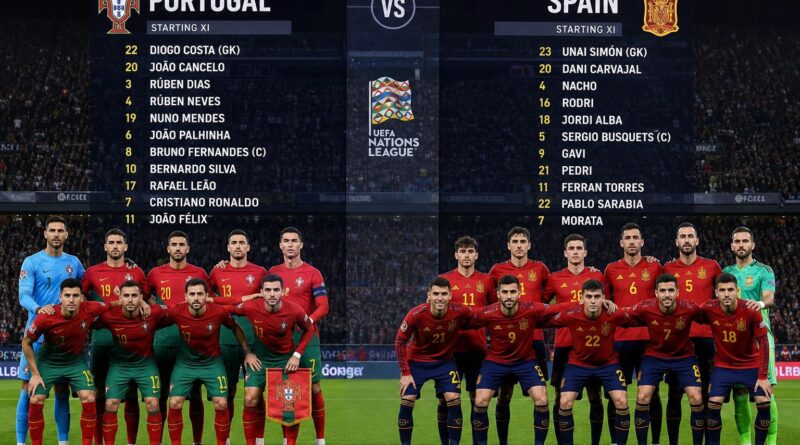
Portugal National Football Team vs Spain National Football Team Lineups: Tactics, Trends, and What Really Decides the Iberian Derby
The rivalry between Portugal and Spain rarely disappoints. It’s a tug-of-war between two football philosophies that know each other’s tricks yet keep finding new ways to surprise. If you’ve ever seen a team sheet drop an hour before kickoff and wondered how those eleven names would actually play, this guide is for you. We’ll unpack how the portugal national football team vs spain national football team lineups have evolved, what each coach is trying to accomplish, how individual roles interact across the pitch, and how to read a lineup like a coach instead of a spectator. We’ll also cover practical, Canada-specific details—where to watch, when lineups are released, what betting markets hinge on selection news, and where in Canadian cities supporters gather to make matchday feel like Lisbon or Madrid.
By the end, you’ll be able to look at any Portugal vs Spain team sheet and predict the first 20 minutes of the match with surprising accuracy. More importantly, you’ll understand why the choices make sense, not just who happens to be playing.
Why Lineups Matter More Than You Think in Portugal vs Spain
At first glance, a lineup looks simple: names, numbers, maybe a formation stencil. But in elite matches like Portugal versus Spain, selection is strategy in shorthand. A manager isn’t just picking the “best” eleven. They’re choosing trade-offs—pressing power vs. control, direct running vs. patient overloads, set-piece height vs. agility in transitions. A single change—say, a ball-carrying fullback instead of a stay-at-home defender—can flip the flow of the game.
In the Iberian derby, those trade-offs are amplified. Spain tend to build their identity around structured possession, using a midfield anchor to dictate tempo and wingers who stretch the pitch. Portugal, especially in recent years, lean into flexible shapes designed to win territory quickly, attack space with pace, and press selectively. When these philosophies meet, lineups forecast where the match will be fought: the half-spaces around Spain’s holding midfielder, the channels behind Portugal’s wing-backs, or the airspace on set pieces.
Coaching Philosophies: The Blueprint Behind the Names
Managers set the tone long before the anthem. Understanding the coaches behind the portugal national football team vs spain national football team lineups is the best shortcut to predicting patterns on the pitch.
Portugal’s Roberto Martínez: Flexibility With a Cutting Edge
Since taking charge in 2023, Roberto Martínez has blended Portugal’s technical core with a flexible system that toggles between a back three and a back four. On paper, he often lists a 3-4-2-1 or a 4-3-3, but the rhythms are what matter: wing-backs (or adventurous full-backs) provide width, one holding midfielder protects transitions, and two creative midfielders or inside forwards float between lines. The aim is clear—arrive quickly in dangerous zones without losing compactness when the ball is lost.
Martínez trusts leaders like Rúben Dias and Pepe to direct the back line and orchestrate pressing triggers. In possession, Portugal will happily play through Bernardo Silva’s clever pockets, use Bruno Fernandes to punch vertical passes, and let wide men like Rafael Leão attack fullbacks at pace. Against top sides, he has been comfortable conceding non-threatening possession to strike in bursts, a philosophy that suits Portugal’s direct runners and experienced back line.
Spain’s Luis de la Fuente: Structure, Speed, and a Ruthless Final Third
Spain under Luis de la Fuente returned to a front-footed 4-3-3, with a modern twist. Yes, there’s still a metronome in midfield—Rodri’s name is practically etched onto the teamsheet—but the flanks are younger, faster, and more daring. With wingers like Lamine Yamal and Nico Williams, Spain can stretch both touchlines and win 1v1s, while fullbacks support without overcommitting. The result at Euro 2024 spoke for itself: control in midfield without becoming predictable in attack.
De la Fuente’s Spain can suffocate games via possession, yet they now carry a cutting edge in transition. The midfield triangle of a single pivot and two adventurous eights (for example, Fabián Ruiz and Dani Olmo/Pedri when fit) creates overloads and late arrivals into the box. The number nine—often Álvaro Morata—anchors the line, drags centre-backs, and opens lanes for the wingers to finish moves.
Formations and Roles: Typical Lineups and How They Function
Below are representative XI selections and role notes based on recent cycles, not guesses about a specific future match. Think of them as blueprints that managers adapt to injuries, opponent tendencies, and tournament context.
Portugal: Typical XI and Role Notes
Base shapes: 3-4-2-1 or 4-3-3 that morph during phases. Width from full-backs or wing-backs, two creators between lines, and a focal point in the box.
| Position | First-choice profile | Role in the system | Alternatives/Rotation |
|---|---|---|---|
| GK | Diogo Costa | Shot-stopper with strong distribution; calm under press | Rui Patrício, José Sá |
| CB (Right) | João Cancelo in a hybrid role (if back three, as RWB/RCB overlap) | Progression by carrying/passing; switches of play | Nelson Semedo (RWB), Diogo Dalot (RB) |
| CB (Centre) | Rúben Dias | Defensive leader; sets line height; aerial anchor | Gonçalo Inácio, António Silva |
| CB (Left) | Pepe or Gonçalo Inácio | Experience vs. pace trade-off; covers channel | Danilo Pereira, António Silva |
| LB/LWB | Nuno Mendes | Explosive overlaps; recovery pace in transition | Raphaël Guerreiro (LB/CM), Diogo Dalot (LB option) |
| DM | João Palhinha | Ball-winner; protects transitions; screens Rodri zone | Rúben Neves, Danilo Pereira |
| CM/8 | Vitinha | Tempo, press resistance, short combinations | Otávio, João Neves |
| AM/10 or RCM | Bruno Fernandes | Vertical passing, late runs, pressing trigger | Bernardo Silva (central), João Félix |
| RW/RCM | Bernardo Silva | Finds pockets; dictates rhythm; links with overlap | Diogo Jota (inverted), Pedro Neto |
| LW | Rafael Leão | 1v1 threat; stretches; transition outlet | Diogo Jota, João Félix |
| ST | Cristiano Ronaldo | Penalty-box presence; aerial threat; set-piece gravity | Gonçalo Ramos |
Portugal’s key decisions revolve around their left channel and central balance. Pick both Leão and Nuno Mendes, and you get vertical thrust—but you also need Palhinha locked in to guard the spaces they vacate. Use Cancelo on the right and the team morphs: he’ll drift into midfield or surge wide, which shifts Bernardo Silva closer to the half-space.
Spain: Typical XI and Role Notes
Base shape: 4-3-3 with a single pivot and high, touchline-hugging wingers. The build-up is patient by design, but the final third is direct and fast.
| Position | First-choice profile | Role in the system | Alternatives/Rotation |
|---|---|---|---|
| GK | Unai Simón | Comfortable in build-up; reflex saves; sweeper actions | David Raya, Kepa Arrizabalaga |
| RB | Dani Carvajal | Balance between overlaps and rest defense | Jesús Navas, Pedro Porro |
| CBs | Aymeric Laporte + Robin Le Normand | Line control; progression; defend in space | Pau Torres, Nacho Fernández |
| LB | Marc Cucurella | Engaged 1v1 defending; conservative overlaps | Jordi Alba (past cycles), Grimaldo |
| DM (6) | Rodri | Metronome; press organizer; fouls to stop counters | Zubimendi |
| CM/8 | Fabián Ruiz | Arrives in the box; switches play; ball-striking | Mikel Merino |
| CM/8 or 10 | Dani Olmo / Pedri (when fit) | Link lines; accelerate combinations; half-space threat | Mikel Oyarzabal (hybrid), Gavi (injury permitting) |
| RW | Lamine Yamal | 1v1 magnet; inside-out passing; early crosses | Ferran Torres, Marco Asensio |
| LW | Nico Williams | Stretch; direct dribbling; back-post runs | Oyarzabal, Ansu Fati (form/fitness dependent) |
| ST | Álvaro Morata | Runs in behind; link play; press from the front | Joselu, Álvaro García (role-based) |
Spain’s selection questions usually hinge on the left eight and the number nine. Do they want a third midfielder who can shoot from distance (Fabián) and one who thrives between lines (Olmo), or a tighter balance with extra defensive grip (Merino)? Up front, Morata’s movement sets passing angles; a different profile like Joselu tilts Spain toward more crosses and second balls.
Depth Charts and Rotation Logic
Elite national teams pick from embarrassment of riches, so context matters. Club minutes and fitness levels heavily influence camps; managers typically protect players returning from injury with substitution plans or altered roles.
- Portugal depth watch: Centre-back succession is real. António Silva and Gonçalo Inácio represent the next generation behind Pepe. In midfield, João Neves has emerged as a high-energy, press-resistant option. Up front, Gonçalo Ramos is the classic penalty-box nine if the game plan pivots away from crosses to Ronaldo.
- Spain depth watch: If Rodri is unavailable, the entire build-up changes; Zubimendi can slot in but Spain lose some press-proofing. At fullback, Spain balance attacking intent with reliability—Carvajal/Navas for experience versus a more modern, high-running profile. Wide forward depth is abundant but stylistically different: Ferran Torres offers diagonal runs and finishing, while Oyarzabal is a connector who can also play as a narrow left forward.
Historical Case Studies: How Lineups Shaped the Biggest Meetings
When you compare the portugal national football team vs spain national football team lineups over time, patterns emerge. The matches below show how small selection choices cascaded into big outcomes.
2010 World Cup Round of 16: Spain 1–0 Portugal
Spain’s golden midfield era leaned on Xavi, Iniesta, and Busquets with David Villa drifting off the left. Portugal’s structure under Carlos Queiroz set out to deny central combinations. The Spanish fullbacks—Sergio Ramos and Joan Capdevila—were crucial to create width since Portugal packed the middle. Ultimately, Villa’s movement inside the half-space created the decisive goal. The lesson: against Spain’s possession, denying the centre isn’t enough unless you also choke supply from fullbacks and track inverted runs.
Euro 2012 Semifinal: Spain (p) 0–0 Portugal
Portugal’s press that night was brave and smart. Cristiano Ronaldo and Nani split to cover passing lanes to Spain’s fullbacks, while João Moutinho and Raúl Meireles stepped aggressively to Xavi and Busquets. Spain rotated later in the match to freshen the midfield, but Portugal’s compact 4-3-3 without the ball gave them multiple transition chances. The penalty shootout decided it, yet the tactical takeaway endures: a staggered but synchronized press can make Spain’s 4-3-3 look human, provided your back line wins 1v1s against late midfield arrivals.
2018 World Cup Group Stage: Portugal 3–3 Spain
A showcase of individual brilliance and structural ebb and flow. Spain, with Isco and Iniesta scheming between lines and Diego Costa bullying centre-backs, found channels through clever rotations. Portugal’s selection—Ronaldo supported by a second forward and industrious midfielders—kept Spain honest on the break. Ronaldo’s hat-trick highlighted a perennial truth: you can control a lot against Portugal, but you can’t control everything against Ronaldo’s timing and technique. Lineup reads that day would have flagged Spain’s ball progression superiority—and Portugal’s set-piece and transition punch. Both came true.
2022 UEFA Nations League, Braga: Portugal 0–1 Spain
High stakes, late drama. Spain’s lineup skewed toward control and wide speed off the bench. The winner? Álvaro Morata, fed by a late run and cross from Nico Williams. Portugal’s shape had guarded the centre well, but the final 15 minutes showed Spain’s bench can flip scripts: fresh wingers stretch a tiring back line, and a mobile nine punishes the first broken marking chain. The selection lesson is evergreen: keep an eye on Spain’s wing options listed among the substitutes—those names can be the headline by full-time.
Matchup Dynamics Today: Where This Game Is Won
Modern lineups are puzzles. Each piece carries risk and reward. Here’s where those choices collide when Portugal meet Spain now.
The Midfield Triangle: Rodri vs Palhinha + Creators
Rodri’s presence turns Spanish possession from patient to inevitable. With him, Spain can fix the centre and progress without rushing. Portugal’s counter? A ball-winner like Palhinha paired with a press-resistant carrier (Vitinha) and a vertical threat (Bruno). If Portugal start both Bruno and Bernardo, expect one to curve runs toward Rodri’s blind side, forcing him to turn and play backward, buying time for the mid-block to reset. If Spain deploy Olmo as an interior, his drifting into the right half-space asks a hard question of Portugal’s near-side wing-back: follow inside or pass him on and risk a free man near the box?
Wide Duels: Yamal and Nico Williams vs Nuno Mendes and Cancelo (or Dalot)
Spain’s wingers attack first, think second. Lamine Yamal’s body shape hides intentions until the last second, while Nico Williams’ first touch often puts a fullback on the back foot. Portugal’s answer is layered: Nuno Mendes’ recovery speed can bail out high positioning; on the other flank, the choice between Cancelo (attacking upside) and Dalot (defensive reliability) signals intent. If Cancelo starts and drifts inside, Bernardo must backfill the channel out of possession. If Dalot starts, Portugal sacrifice some build-up sizzle for 1v1 stability.
Pressing and Build-out: Who Blinks First?
Spain’s first line press under de la Fuente is coordinated but not reckless. Morata shades passing lanes, the ball-side winger jumps the fullback, and the nearest eight locks onto the pivot. Portugal will try to beat that first wave via Diogo Costa’s distribution and midfield rotations to create the “free man” in the second line—often Vitinha showing between attackers. Conversely, when Portugal choose to press, Bruno typically cues the trigger, with wingers cutting off the return pass. The gamble is at the back: hold a high line and risk runs from Morata, or step off and allow Spain to advance before springing traps in crowded zones.
Set Pieces: Margins That Decide Tournaments
Portugal bring size and delivery. Bruno’s dead balls plus Rúben Dias’ timing make corners and wide free kicks real weapons. Spain are tidier than feared at set plays: Laporte and Le Normand attack zones strongly, and Morata is no slouch in the air. Watch who lines up on the back post for both teams—Portugal like late, flat deliveries to the near post to create second balls; Spain mix blockers and curlers to the penalty spot. In games where open-play chances are at a premium, these details swing results.
How Managers Pick Lineups: The Real-World Constraints
International managers live with incomplete information. They get players for short windows and must blend club workloads, travel fatigue, and tactical needs. Here’s the toolkit both sides actually use:
- Minutes management: Players coming off heavy club minutes (think deep Champions League runs) might be eased into early fixtures of a window.
- Data and GPS: Sprint counts and high-intensity efforts guide selection. A winger who did 100+ high-speed runs four days earlier may start on the bench, even if he’s a star.
- Club chemistry: Pairs and trios from the same club or domestic league often slot together smoothly—centre-back duos, or a pivot and interior who naturally share spacing.
- Opponent scouting: Coaches pick lineups to target a specific weakness—a fullback uncomfortable 1v1, or a midfield that struggles against back-to-goal forwards.
- Game-state planning: Substitutes are part of the initial plan. Spain, for instance, may hold a direct winger to attack tired legs at 70’. Portugal might reserve a classic nine for late set-piece flurries.
How to Read an Announced Lineup Like a Coach
Lineups are released roughly 60 minutes before kickoff in official competitions. Use those 60 minutes wisely.
- Identify the pivot(s): Is Rodri playing? Is Palhinha in? This tells you where the game will be slowest—and therefore safest—for each side.
- Check the fullback/wing-back profiles: Two attacking fullbacks often mean high possession aims. A cautious pair hints at respect for transitions.
- Spot the free creator: For Spain, is the left eight a runner (Merino) or a connector (Olmo)? For Portugal, is Bernardo central or wide? That’s where the overload will form.
- Scan for aerial threats: If Portugal start both Dias and a tall striker, expect set plays to be emphasized. If Spain field Joselu, anticipate more early crosses.
- Read the bench: Who is the “game breaker” after 70’? Nico Williams off the bench telegraphs late wide pressure. Diogo Jota as a sub screams direct runs behind.
Canada-Focused Guide: Watching, Wagering, and Matchday Culture
Where to Watch in Canada
Broadcast rights shift, so always check schedules close to matchday. As a rule of thumb:
- UEFA tournaments (European Championships, qualifiers, Nations League) commonly air on TSN/CTV in English and RDS in French. Verify listings on their official sites or apps.
- Some friendlies and additional European fixtures can appear on streaming platforms active in Canada. Options change by cycle; consult the competition organizer (UEFA) and national federations (FPF and RFEF) for confirmed broadcasters.
- Closed-captioning and French-language coverage are widely available; RDS typically provides comprehensive French broadcasts.
Tip: Set alerts in the TSN app and follow the Portuguese Football Federation (fpf.pt) and Spanish Football Federation (rfef.es) on social media for last-minute schedule updates. UEFA.com also lists official broadcast partners per territory.
Time Zones and Practical Viewing Tips
Most Portugal and Spain fixtures kick off evening local time, which translates to afternoon in Canada. Approximate conversions:
- Lisbon/Madrid 20:45 → Toronto/Montreal (ET) 15:45; Winnipeg (CT) 14:45; Calgary (MT) 13:45; Vancouver (PT) 12:45; St. John’s (NT) 17:15.
- Daylight Saving shifts can complicate things. Use your phone’s world clock and double-check the matchday time zone.
If you’re catching the match from work, headphones and a data-friendly stream on a tablet can be a lifesaver. And if you’re recording, beware of spoiler notifications from apps—mute alerts an hour before kickoff when lineups roll out.
Sports Betting in Canada: Legal Landscape and Lineup-Driven Markets
Single-event sports betting is legal in Canada. Provincial governments regulate platforms and markets, and Ontario has a separate regulated iGaming market. Familiar names include:
- Ontario: Multiple private operators licensed by iGaming Ontario (under AGCO oversight); PROLINE+ also available.
- British Columbia, Manitoba, Saskatchewan: PlayNow.
- Quebec: Mise‑o‑jeu+ via Loto‑Québec.
- Alberta: Play Alberta.
- Atlantic provinces: ALC PRO•LINE.
Lineups matter for bets. Here’s how to use the team sheet intelligently:
- Anytime goalscorer: If Portugal start both Leão and a central striker, consider the winger’s value—Spain’s low block can funnel crosses to the back post.
- Player shots/assists: Bernardo central increases his key-pass probability; Nico Williams starting often boosts his shots assisted via cutbacks.
- Cards: Palhinha facing Spain’s rotating eights can inflate foul counts. Conversely, if Spain start both Yamal and Williams, fullbacks defending them may draw cautions.
Wager responsibly. Provincial platforms provide tools like deposit limits, time-outs, and reality checks. If you’re in Ontario, look for the “PlaySmart” resources; other provinces offer equivalent programs. Always confirm local regulations and age requirements.
Matchday Culture in Canada: Where Iberia Meets the 6ix, la Belle Province, and Beyond
Canada’s Portuguese and Spanish communities make these fixtures feel local. In Toronto, Little Portugal along Dundas Street West and Ossington hums on matchdays—cafés and bakeries turn into viewing parties. In Montreal, you’ll find packed terraces in Mile End and the Plateau, with Portuguese clubs and Iberian restaurants filling early for afternoon kickoffs. Vancouver’s Commercial Drive and parts of Kitsilano gather mixed European crowds; you’ll spot Portugal scarves and Spain flags in equal measure.
Bring cash for quick service at halftime, arrive early if you want a screen-side seat, and expect lively but respectful banter. If you’re bringing kids, afternoon kickoffs make family outings easy—ear defenders for toddlers are a thoughtful touch in louder bars.
Trustworthy Sources and How to Avoid Rumour Traps
National-team news can get noisy. Use official channels first, then reputable journalists with track records.
- Official federations: fpf.pt (Portugal), rfef.es (Spain).
- Competition organizers: UEFA.com for match centres, lineups, and disciplinary updates.
- Club communications: Injury bulletins from players’ clubs often precede national call-ups.
- Accredited reporters: Verified correspondents covering La Liga, Primeira Liga, and national teams provide pre-match hints without sensationalism.
Beware of “leaked XIs” circulating more than 90 minutes before kickoff. Even when a leak is right, last-minute tightness in warm-ups can change everything. If you need certainty—say, for a fantasy or betting decision—wait for the official lineup release on UEFA’s match page or the federations’ verified social accounts.
Example Lineup Scenarios: How Choices Shift by Match Context
These are illustrative scenarios, not predictions. They show how each coach might tilt selection depending on the stakes and the opponent’s strengths.
Scenario A: Tournament Knockout, Evenly Matched
Priority: control transitions and protect the middle while keeping enough edge to win a tight game.
| Team | Shape | XI (illustrative) | Key Ideas |
|---|---|---|---|
| Portugal | 3-4-2-1 | Diogo Costa; Pepe, Rúben Dias, Gonçalo Inácio; Cancelo, Palhinha, Vitinha, Nuno Mendes; Bernardo Silva, Bruno Fernandes; Cristiano Ronaldo | Wing-backs high with Palhinha anchoring; Bruno and Bernardo find Rodri’s blind side; protect half-spaces via back three. |
| Spain | 4-3-3 | Unai Simón; Carvajal, Le Normand, Laporte, Cucurella; Rodri, Fabián Ruiz, Dani Olmo; Yamal, Morata, Nico Williams | Pin wing-backs; isolate Morata on weak-side CB; late-arriving Olmo in the right half-space; fullbacks measured to guard counters. |
Scenario B: Spain Chasing a Goal Late
Spain stack wide speed and aerial presence; Portugal double down on rest defense and counterpunches.
- Spain subs on: Ferran Torres and Oyarzabal, possibly Joselu for a cross-heavy final push.
- Portugal subs on: Dalot for defensive balance, João Félix for ball-carrying relief, and a fresh runner like Diogo Jota to keep Spain honest.
Scenario C: Portugal Targeting Space Behind High Fullbacks
If Spain’s fullbacks climb, Portugal will bait the press and release Leão or Jota early.
- Portugal tweak: Bruno drops into a false double-pivot off goal kicks to draw Spain’s eight; Cancelo stays wider to create the diagonal for Leão.
- Spain counter: Rodri sits deeper to split centre-backs in build, reducing exposure; the weak-side winger tucks in to prepare counter-press traps.
Player Pools by Unit: Who’s Likely to Appear and Why It Matters
The names evolve, but the profiles matter more. Knowing the “type” each manager favors at a position helps you anticipate the XI.
Portugal Player Pool Snapshot (Selected, Recent Cycles)
- Goalkeepers: Diogo Costa; Rui Patrício; José Sá.
- Centre-backs: Rúben Dias; Pepe; Gonçalo Inácio; António Silva; Danilo Pereira.
- Fullbacks/Wing-backs: João Cancelo; Nuno Mendes; Diogo Dalot; Raphaël Guerreiro; Nelson Semedo.
- Midfielders: João Palhinha; Vitinha; Bruno Fernandes; Bernardo Silva; Otávio; João Neves; Rúben Neves.
- Forwards/Wingers: Cristiano Ronaldo; Rafael Leão; Diogo Jota; João Félix; Pedro Neto; Gonçalo Ramos.
Spain Player Pool Snapshot (Selected, Recent Cycles)
- Goalkeepers: Unai Simón; David Raya; Kepa Arrizabalaga.
- Centre-backs: Aymeric Laporte; Robin Le Normand; Pau Torres; Nacho Fernández.
- Fullbacks: Dani Carvajal; Jesús Navas; Marc Cucurella; Alejandro Grimaldo.
- Midfielders: Rodri; Fabián Ruiz; Dani Olmo; Pedri; Mikel Merino; Martín Zubimendi; Gavi (fitness dependent).
- Forwards/Wingers: Álvaro Morata; Nico Williams; Lamine Yamal; Ferran Torres; Mikel Oyarzabal; Joselu.
Note: Player availability can change quickly due to injuries and club form. Always verify with the federations’ matchday announcements.
Portugal vs Spain: Quick-Reference Lineup Comparisons
| Aspect | Portugal | Spain |
|---|---|---|
| Base shape | 3-4-2-1 or 4-3-3 | 4-3-3 |
| Core identity | Controlled directness; transition threats | Structured possession; wide 1v1s |
| Key pivot | João Palhinha (destroyer) | Rodri (metronome) |
| Primary creators | Bernardo Silva; Bruno Fernandes | Dani Olmo/Pedri; Fabián Ruiz |
| Primary wide threats | Rafael Leão; Cancelo overlaps | Lamine Yamal; Nico Williams |
| Striker profile | Penalty-box finisher (Ronaldo) or emerging nine (Ramos) | Mobile line-leader (Morata) or target man (Joselu) |
| Set-piece edge | Strong delivery and aerial targets | Organized zones; capable finishers |
Learning From Iberia: What Canadian Coaches and Players Can Borrow
Two national programs, two different strengths—both with lessons for Canada’s player pathway and coaching community.
- From Spain: The value of a stable positional play framework across age groups. A clear role for the pivot and interior eights allows fluid integration of new talent without changing the whole scheme.
- From Portugal: Flexibility and opportunism. Embrace hybrid roles (e.g., fullback who can invert) and teach players to adapt shapes on the fly. It suits a country drawing from multiple leagues and club philosophies—much like Canada’s player pool.
- Shared lesson: Wide players who can win 1v1s simplify every tactical puzzle. Invest in winger development—not only dribbling, but decision-making at full speed.
For Canadian academies, this means building repetition into position-specific habits (Spain’s model) while allowing match plans to flex per opponent (Portugal’s edge). Coaches in Ontario, Quebec, and B.C. who bridge those ideas will help prospects adjust seamlessly to international styles.
Preparing for Matchday: A Practical Checklist
Want to be the friend who nails the pre-match analysis? Run through this list when the team sheets drop.
- Scan the pivots: Rodri and Palhinha starting together usually means a midfield chess match, slower tempo, and fewer chaotic transitions.
- Check the fullbacks: If both Portuguese fullbacks are aggressive, expect Spain to probe early behind them. If Spain start Cucurella and Carvajal, transitions should be better protected.
- Locate the creators: Bruno wide? Expect back-post runs from the far winger. Olmo central? Spain will flood a half-space with wall passes.
- Cross-match aerials: Dias plus Ronaldo means near-post corners are live. Morata plus Le Normand adds Spain’s bite on both ends.
- Bench map: Identify the last 20-minute sprinters—Nico Williams, Ferran, Jota; anticipate which fullback they’ll test.
- Discipline watch: Tournament yellow-card thresholds vary by competition. If a key midfielder is one booking from suspension, the coach may adjust his minutes or role.
Tactical Micro-Battles To Watch
Portugal’s Right Overload vs Spain’s Left Block
When Portugal overload their right—Bernardo drifting inside, Cancelo underlapping, Bruno sliding across—Spain’s left side (Cucurella + left eight) must coordinate presses without exposing the channel. If Spain win those duels, they spring Nico Williams into the space Bernardo vacates. If Portugal break through, they find cutbacks to the penalty spot where Ronaldo or late runners feast.
Spain’s Inverted Winger Pass vs Portugal’s Back-Three Shifts
Spain frequently use the inside pass from a wide winger to a crashing eight. Against a Portugal back three, the near-side centre-back must decide: step and risk a through ball to Morata, or hold and concede the turn. Palhinha’s screening of that pass is huge; miss a single interception and Spain are running downhill.
First Phase Build-Up: Goalkeeper as Playmaker
Diogo Costa’s long diagonals can flip a pressing scheme in one kick. If Spain’s first press is too aggressive, one flat ball toward Leão or Jota can yield a 2v2 within seconds. Unai Simón, for his part, is calm enough under pressure to bait the first presser and find Rodri on the half-turn, which resets the chessboard in Spain’s favour. Which keeper completes the first two risky passes often sets the tone.
Common Pitfalls in Interpreting Lineups
- Assuming the listed formation equals the defensive shape. A 4-3-3 on paper may defend as a 4-4-2, with an eight stepping to the front line.
- Ignoring relationships. A fullback’s risk profile may depend on the winger in front of him. Cancelo next to Bernardo is a different dynamic than beside Jota.
- Forgetting substitutions are planned. Managers don’t “react” to the game so much as they unspool a script, adjusted for what the opponent does.
Mini-Guide for Travelling Canadians: Catching the Derby in Europe
Dreaming of watching Portugal vs Spain live? Canadians can visit Portugal and Spain visa-free for short stays. Check official Government of Canada travel advisories for entry rules and health requirements. An EU travel authorization system (ETIAS) is planned—timelines have shifted; verify the latest on official EU sites before you book.
Stadium staples:
- Portugal: Estádio da Luz (Lisbon) and Estádio do Dragão (Porto) often host big nights. Arrive early; metro lines can be packed.
- Spain: La Cartuja (Seville), Santiago Bernabéu (Madrid), and other rotating venues. The national team plays across cities; tickets sell fast.
Bring a light jacket for evening kickoffs, carry a digital payment method plus some cash for kiosks, and respect local supporter sections—great atmosphere, better photos if you ask first.
Sample Match Flow Based on Lineups
Imagine a lineup where Spain start Yamal and Williams with Olmo as the right interior, while Portugal field a back three with Nuno Mendes and Cancelo as wing-backs. Here’s a likely first 20 minutes:
- Spain establish Rodri early with simple triangles to draw out Portugal’s right wing-back. Yamal holds the width; Carvajal underlaps occasionally to keep the near-side centre-back guessing.
- Portugal respond by curving Bernardo’s press to block the pass lane to Rodri, forcing Spain left. When the ball travels to Cucurella, Bruno jumps the lane; Portugal look for Leão into the space behind Carvajal on the turnover.
- Set-piece skirmishes ensue. Portugal target the near post; Spain box out and spring a quick release to Williams. Momentum swings with each duel.
Change just two names—Dalot for Cancelo and Merino for Olmo—and the script slows, with fewer transitions and more aerial tussles. That’s how sensitive this rivalry is to selection.
Head-to-Head Snapshot: Results and What They Said About Selection
| Match | Score | Selection Takeaway |
|---|---|---|
| 2010 World Cup R16 | Spain 1–0 Portugal | Fullbacks as playmakers broke a compact block; Villa’s half-space movement decisive. |
| Euro 2012 Semifinal | 0–0 (Spain win on pens) | Portugal’s coordinated press neutralized Spain’s midfield; margins decided it. |
| 2018 World Cup Group | Portugal 3–3 Spain | Spain controlled play; Portugal’s individual brilliance and set plays leveled it. |
| 2022 Nations League (Braga) | Portugal 0–1 Spain | Bench wingers and a mobile nine flipped the ending. |
Putting It All Together: A Fan’s Quick Workflow
When team sheets land for the next portugal national football team vs spain national football team lineups clash, do this:
- Mark the pivots and the eights.
- Note fullback risk vs. winger speed.
- Cross-reference aerial edges.
- Identify the 70’ impact subs on both sides.
- Adjust your expectations: If both teams pick control-heavy XIs, brace for a game decided by one moment or penalties. If both pick speed, expect swings—and possibly a classic.
FAQ
Who usually starts up front for Spain in big games?
Álvaro Morata is the typical choice. His movement creates lanes for wingers and eights, he presses well, and he’s comfortable linking play. If Spain need a late aerial push, Joselu is a common alternative off the bench.
Does Cristiano Ronaldo still start for Portugal?
In recent cycles, yes—particularly in tournament matches. His penalty-box instincts and set-piece gravity remain valuable. If the plan calls for more sprinting behind the line, Gonçalo Ramos offers a different look.
How far in advance are official lineups released?
Generally 60 minutes before kickoff for official competitions. Trust the federations’ verified accounts and the competition’s match centre for accuracy.
What’s the main tactical battleground in Portugal vs Spain today?
The midfield axis around the pivots (Rodri vs Palhinha) and the wide duels (Yamal/Williams vs Portugal’s fullbacks). Control there shapes everything else—tempo, territory, and chance quality.
Where can I watch in Canada?
UEFA competitions typically air on TSN/CTV (English) and RDS (French). Always confirm closer to matchday on the broadcasters’ sites or apps. Some friendlies may appear on other licensed platforms; check UEFA and the national federations for local partners.
Are there lineup-specific betting angles I should consider?
Yes. Anytime goalscorers and shots/assists markets often hinge on whether creative players start centrally or wide. Cards markets can be influenced by 1v1 matchups—aggressive wingers versus defensive fullbacks tend to generate fouls. Always bet within your limits.
What did the lineups look like in the 2018 World Cup 3–3?
Spain ran a 4-3-3 with a technical midfield and Diego Costa up front; Portugal used a structure that enabled Ronaldo as the finishing spear with support for transitions. The precise elevens are public record, but the key was Spain’s control versus Portugal’s cutting edge—both reflected in selection.
How do injuries and club minutes affect selections?
Significantly. Managers weigh recent workloads, travel, and lingering knocks. Expect rotation in friendly windows and tighter, more predictable choices in tournament knockouts.
What’s a reliable way to anticipate in-game adjustments?
Look at the bench and identify pace and profile changes. A Spain substitution adding a direct winger signals more crosses and cutbacks; a Portugal sub bringing on a defensive fullback suggests they’ll protect a lead and seek counters.
Is there a Canadian angle to the rivalry beyond viewing?
Absolutely. Portuguese and Spanish communities across Toronto, Montreal, and Vancouver turn matches into cultural events. For coaches and players, the contrasting styles offer a live masterclass in how elite teams solve problems with selection and structure.